
Hello! Welcome to this website.
I'm just a regular Japanese person living in Japan. My English isn't great, and I might use some strange expressions. But as someone who was born and raised in this country, I truly want people all over the world to know about Japan's wonderful culture, delicious food, and rich history.
On this site, I'll introduce Japan as I see it, not as a professional interpreter or guide. My words may not be perfect, but they're all full of my love for Japan and a warm "welcome" to all of you.
So, why don't we, the Japanese people, go on a journey to discover the real Japan together?
Map&Places : The 47 Prefectures of Japan
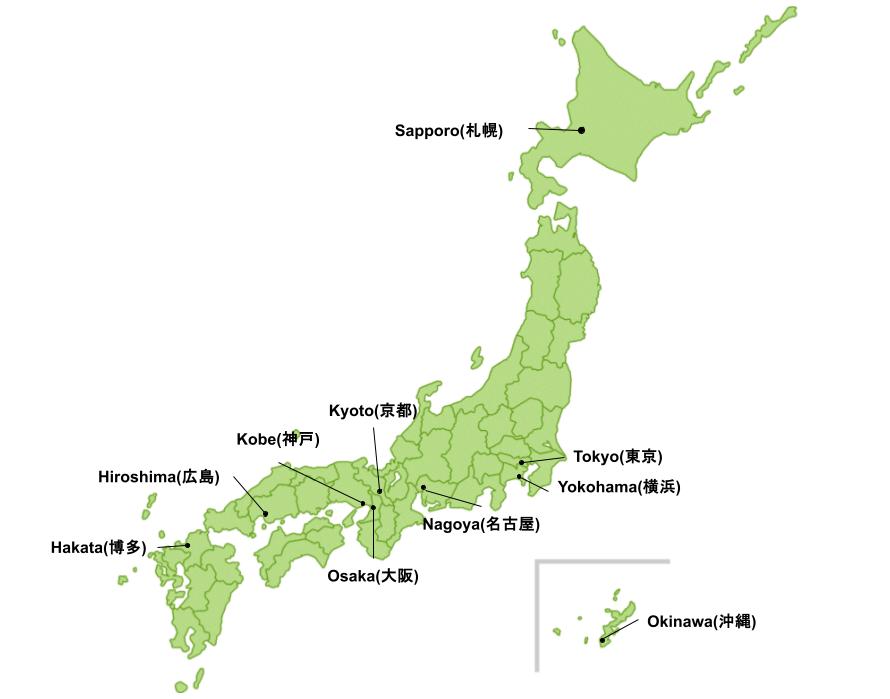
Map of Japan: 47 prefectures and famous places
🗾 The 47 Prefectures of Japan
When you look at a map of Japan, you see the country is divided into many regions, from Hokkaido in the north to Okinawa in the south. These are the "47 Prefectures (47 Todōfuken)".
You might wonder: Why do they have different names like To, Dō, Fu, and Ken? And when did Japan get this distinctive shape?
let's explore the roots of the 47 Prefectures, focusing on the three major turning points in their history!
Goodbye Samurai Rule! The Great Reform of 1871
For a long time during the Edo Period (1603–1868), Japan was divided into around 270 small territories called "Han" (domains), each ruled by a powerful samurai leader, the Daimyō.
When a new central government was established around 1868 (the Meiji Restoration), they decided this old system had to go. This massive reform was called "Haihan Chiken" (Abolition of Domains and Establishment of Prefectures).
What Happened? $\rightarrow$ All the feudal Han were abolished, and the lands were directly controlled by the new government.
The Result? The first "Ken" (prefectures) were born! However, there were over 300 of them, which was too many and highly inefficient. The government immediately began a process of mergers and consolidation.
The Map Takes Shape! The 47 Prototypes are Established (Around 1888)
The government realized that managing over 300 small prefectures was impossible. Over the next two decades, they repeatedly merged (combined) and separated (split) regions to find a balance, much like solving a very complicated puzzle.
This intensive consolidation led to the borders stabilizing near the end of the Meiji Era.
The Resulting Structure $\rightarrow$ By around 1888, the division settled into "3 Fu, 43 Ken, and 1 Chō (Hokkaido Agency)"—a total of 47 administrative units. This is the prototype of the current 47 Prefectures.
The major historical cities of Kyoto, Osaka, and Tokyo were kept as "Fu" due to their importance.
Formalizing the Names! The Modern System (1947)
After World War II, Japan established a modern democratic system. The Local Autonomy Law of 1947 formally defined the highest level of local government, officially establishing the names we use today.
| Type of Unit | Number | Places | Historical Reason |
| To (Metropolis) | 1 | Tokyo-to | A special designation created for the capital city (formerly Tokyo-fu). |
| Dō (Circuit/Territory) | 1 | Hokkaidō | Named for its vast size and history as an undeveloped frontier region. |
| Fu (Urban Prefecture) | 2 | Kyoto-fu, Osaka-fu | Retained from the initial designation of historically important cities. |
| Ken (Prefecture) | 43 | (All others) | The standard designation for most administrative regions. |
🌟 In Summary: A History 150 Years in the Making
The 47 Prefectures of Japan are not random lines on a map—they are the result of a massive, systematic effort during the Meiji Restoration to abolish the old feudal system and establish a unified central government.
It took roughly 20 years of trial and error to organize the many territories into the 47 distinct, manageable regions you see on the map today!
Next time you travel across Japan, remember that each prefecture is a piece of history that dates back to this great political reorganization!
Would you like to know more details about a specific prefecture, or perhaps about the differences in how the prefectures are governed today?
Master the Japanese Calendar! A Guide to Planning Your Perfect Trip
Are you planning your dream trip to Japan? To make the most of your journey, it’s essential to understand how Japanese holidays work. Unlike the long summer "vacances" common in countries like France, Japan has a unique rhythm of shorter, concentrated breaks.
📌 Understanding Japanese Holidays: "Short & Intense"
In Japan, people typically take several short vacations throughout the year, lasting anywhere from 3 days to a week, rather than one long month-off.
During these periods, major tourist destinations, hotels, and transportation become extremely crowded as people across the country travel at once. If you plan to visit during these times, it’s best to go with the mindset of "expecting the crowds" to enjoy the vibrant atmosphere and seasonal festivities.
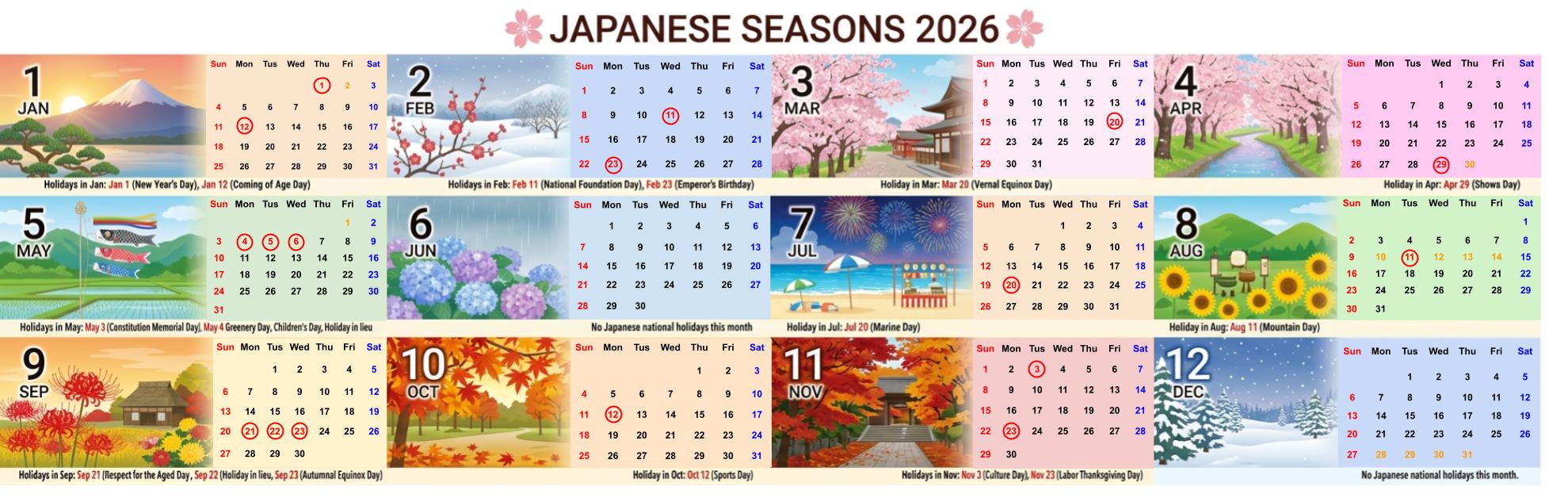
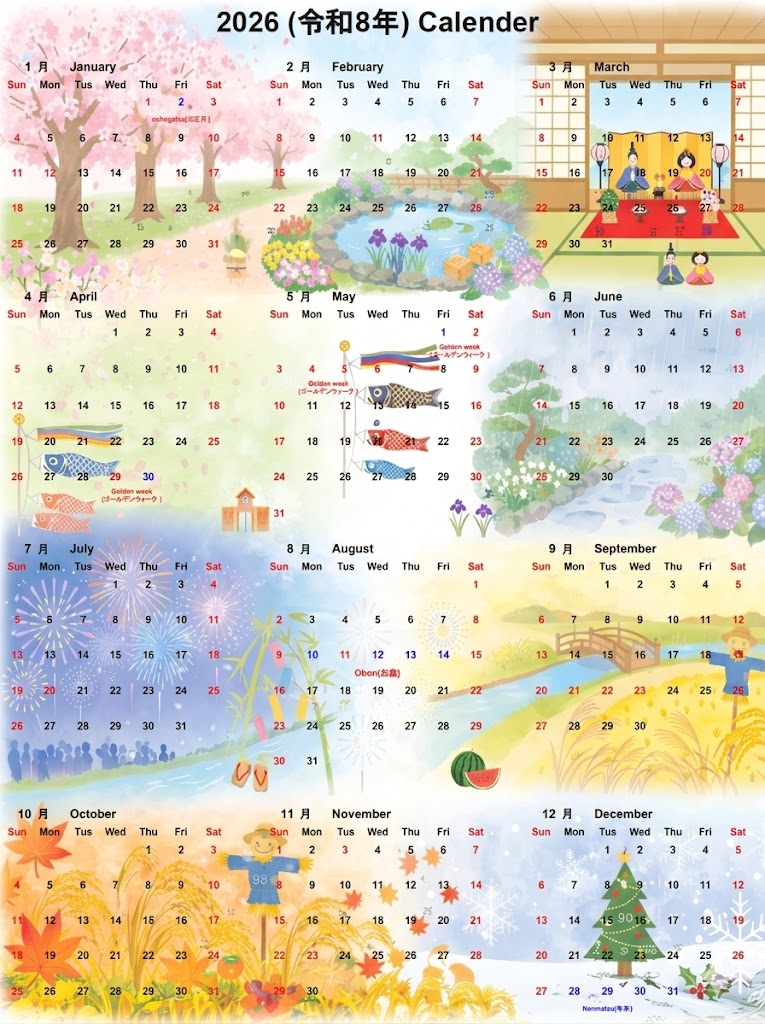
🗓️ How to Read Our Calendar
To help you plan, we have color-coded the dates on our calendar based on expected crowd levels:
- Dates in RED: These are National Holidays. Banks and many public institutions are closed, and sightseeing spots are very busy.
- Dates in BLUE: These are not official holidays, but they are days when many people take time off to create a longer break. Expect crowds similar to national holidays.
While these colored dates are busy, they are also the times when you can experience Japan at its most lively, with traditional festivals and special seasonal events!
🌸 Step 1: Choose Your Favorite Season
Japan’s four seasons offer completely different experiences. Before picking your dates, decide which "version" of Japan you want to see:
- Spring: The iconic cherry blossoms (Sakura) in bloom.
- Summer: Energetic local festivals and spectacular fireworks.
- Autumn: Breathtaking mountains painted in red and gold maple leaves.
- Winter: Serene snow landscapes and cozy hot spring (Onsen) experiences.
Once you’ve chosen your season, use our calendar to check the Red and Blue dates to balance your itinerary between festive excitement and peaceful exploration.
| 1. Year-End & New Year (Dec 26 – Jan 4) / 年末年始 |
| The most important cultural season. |
| Dec 26 – Dec 31: People prepare for the New Year. Expect a "homecoming rush" on trains. |
| Jan 1 – Jan 4: Traditional celebrations. Many shops/restaurants close, but shrines and temples will be packed with people for the first prayer of the year (Hatsumode). |
| 2. Golden Week (Apr 29 – May 6) / ゴールデンウィーク |
| The biggest holiday cluster. Since the weather is perfect, every sightseeing spot will be extremely crowded. |
| 3. Obon Period (Aug 11 – Aug 16) / お盆 |
| Starts from August 11 (Mountain Day). It’s a time to honor ancestors. You can see traditional "Bon Odori" dances and fireworks, but transport will be very busy. |
| 4. Silver Week (Sep 19 – Sep 23) / シルバーウィーク |
| A 5-day autumn break in 2026. A popular time for domestic travel as the weather cools down. |